In a previous blog, I mentioned that when renovating, it is worth restoring or re-installing any period features that may be lacking its lustre or may have been removed by previous homeowners. When doing this, it is definitely helpful to know what the typical features of a particular style are so that you can confidently make design choices that will enhance your home. This blog puts Georgian homes in the spotlight by highlighting key features from this particular span of time.
In this blog, I am highlighting the Georgian Period which began after the Restoration era. It covers the years 1714 – 1830, during which Kings George I through IV reigned on the English throne (hence the name).
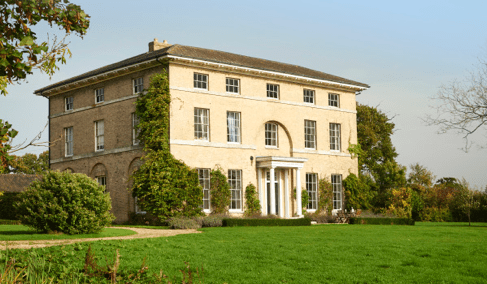
Georgian architecture is closely linked with the Mediterranean, classical style of design which is modest and features strong lines of symmetry, and strict proportions (reminiscent of Palladianism).
During this era, the wealthy invested their excess money in ‘Country Homes’ set within landscaped parks, whereas those who were less well-off lived exclusively in narrow terraced houses like the ones in the image below.
EXTERIOR FEATURES
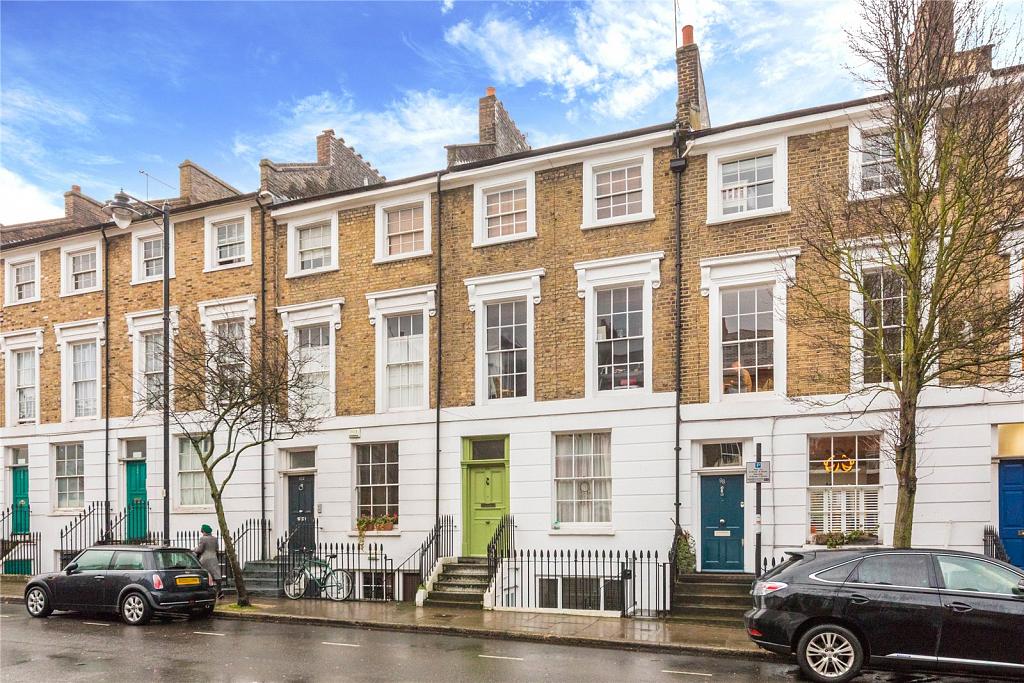
As mentioned above, simplicity is key in terms of the Georgian architecture and the facade is one of the most important design elements for buildings in this era. The strong lines of symmetry and strict balance of proportions in the facade is dictated by the placement of the doors and windows as well as the parapet and lower pitched roofline.
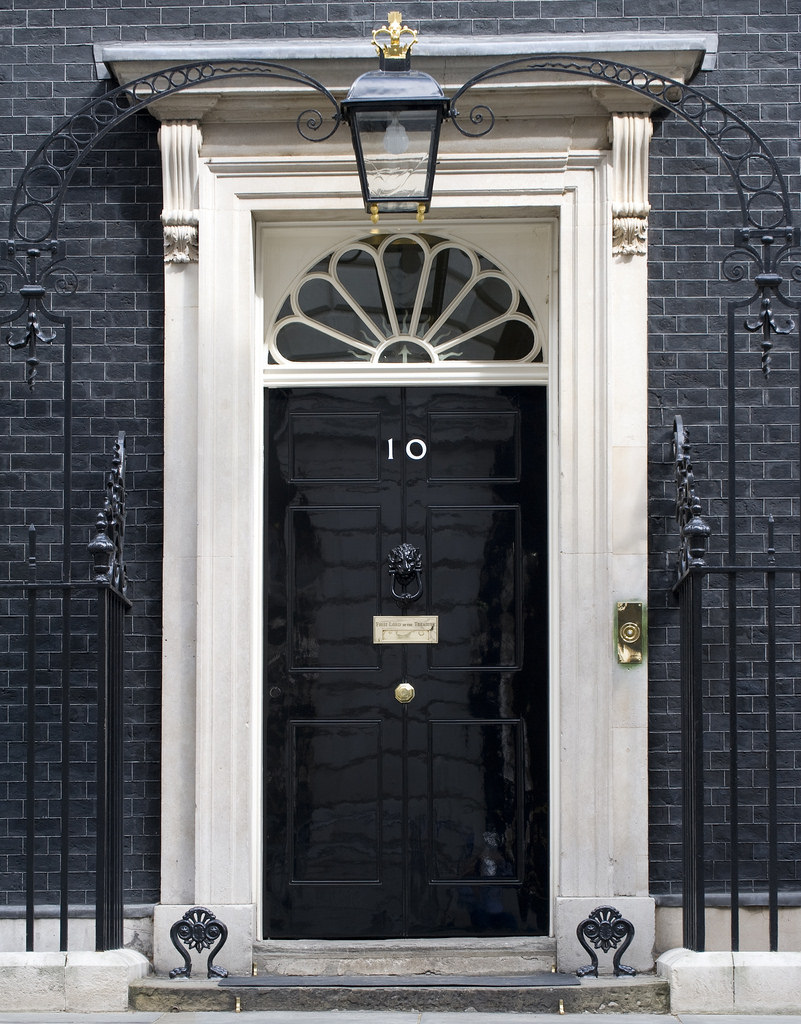
One of the first things you will notice about a Georgian House is its front door and the architrave surrounding it. Typically, a Georgian front door had six panels and was often surrounded by iron work, such as railings or archways with oil lamp holders. Towards the middle of the era, semi-circular windows started to appear above the front door, in order to allow more light into the hallway beyond. If you are planning on installing a new front door on your Georgian home, you should opt for a six panel door rather than a four panelled one, as that is more typical of a home from a later period.
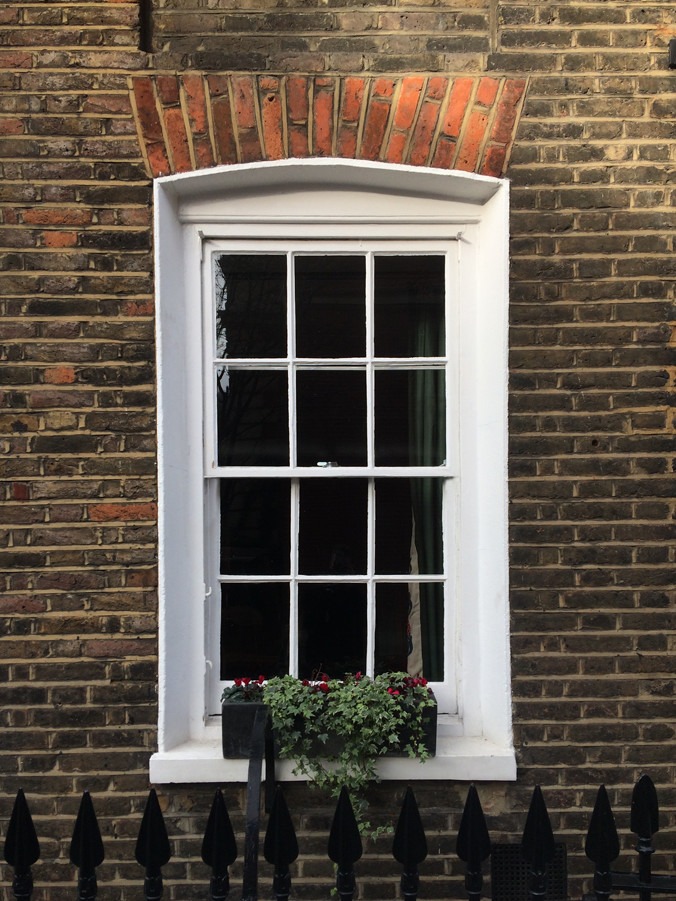
Next, your eyes would probably be drawn to the intricate sash windows that a classic Georgian House has to offer. The sizes of these windows were usually perfectly proportioned in a 1:1.6 ratio meaning that the height of the window was 1.6 times the width. Rooms tended to have multiple windows and the frames were large in this era in order to maximise the amount of light entering a room. Although the window frames were large, the glass was split up into smaller panes in order to minimise the amount of window tax that needed to be paid.
Over the course of the Georgian era, window tax was reduced and larger panes of glass became available. Due to this progression, the sash window formation went from six over six panes, to four over four panes and then two over two (image below). If you have less panes in your original sash windows, then your home was probably built towards the latter part of the Georgian times.
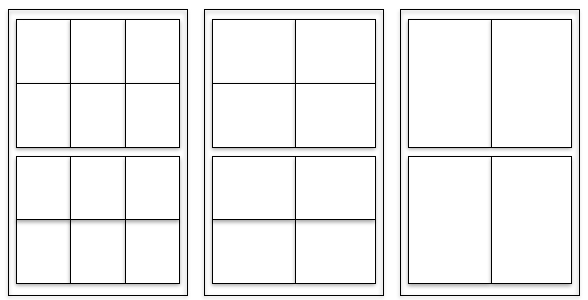
Sash windows with multiple window panes in them really are a fundamental part of the look and feel of homes built in the 17-1800s. If your home falls in this period and you are looking to change your windows, you should definitely avoid replacing them with casement windows.
If your original sash windows still have single glazing and you’re not ready to invest in replacing the windows and frames just yet, you could explore secondary glazing as an alternative option.
INTERIOR FEATURES
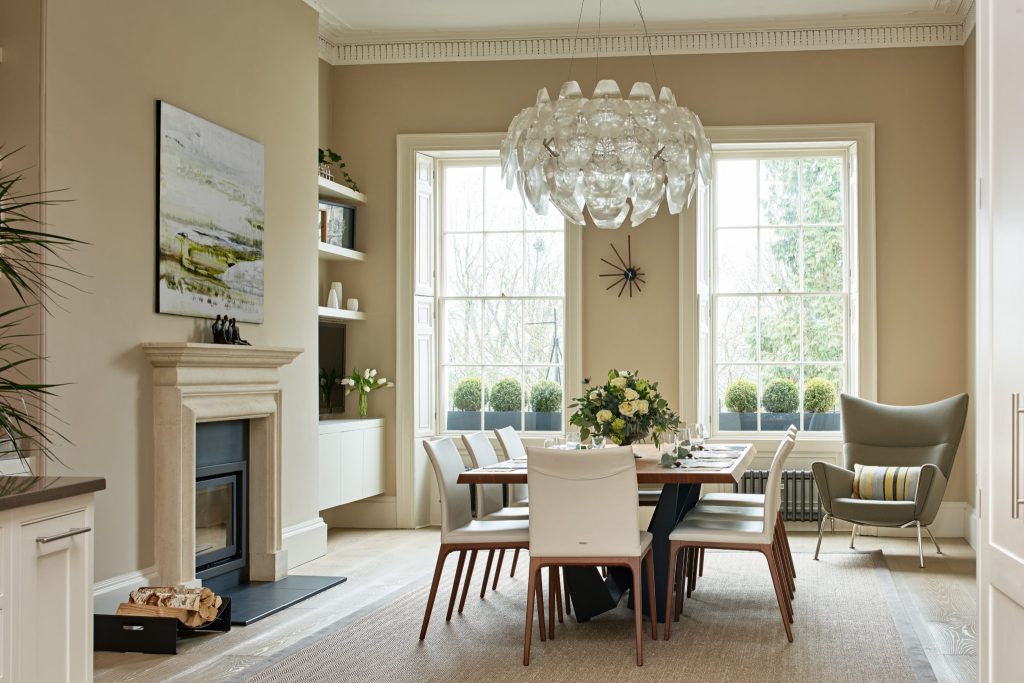
In keeping with the exterior architecture, Georgian interiors are structurally and visually linear, balanced and symmetrical in their structure, giving off a calm and relaxing aura.
Niches and alcoves are common in Georgian interiors. They create visual interest, as well as provide little nooks for reading, studying or storage.
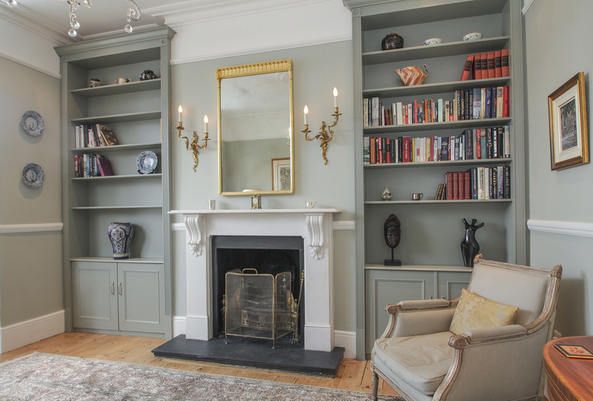
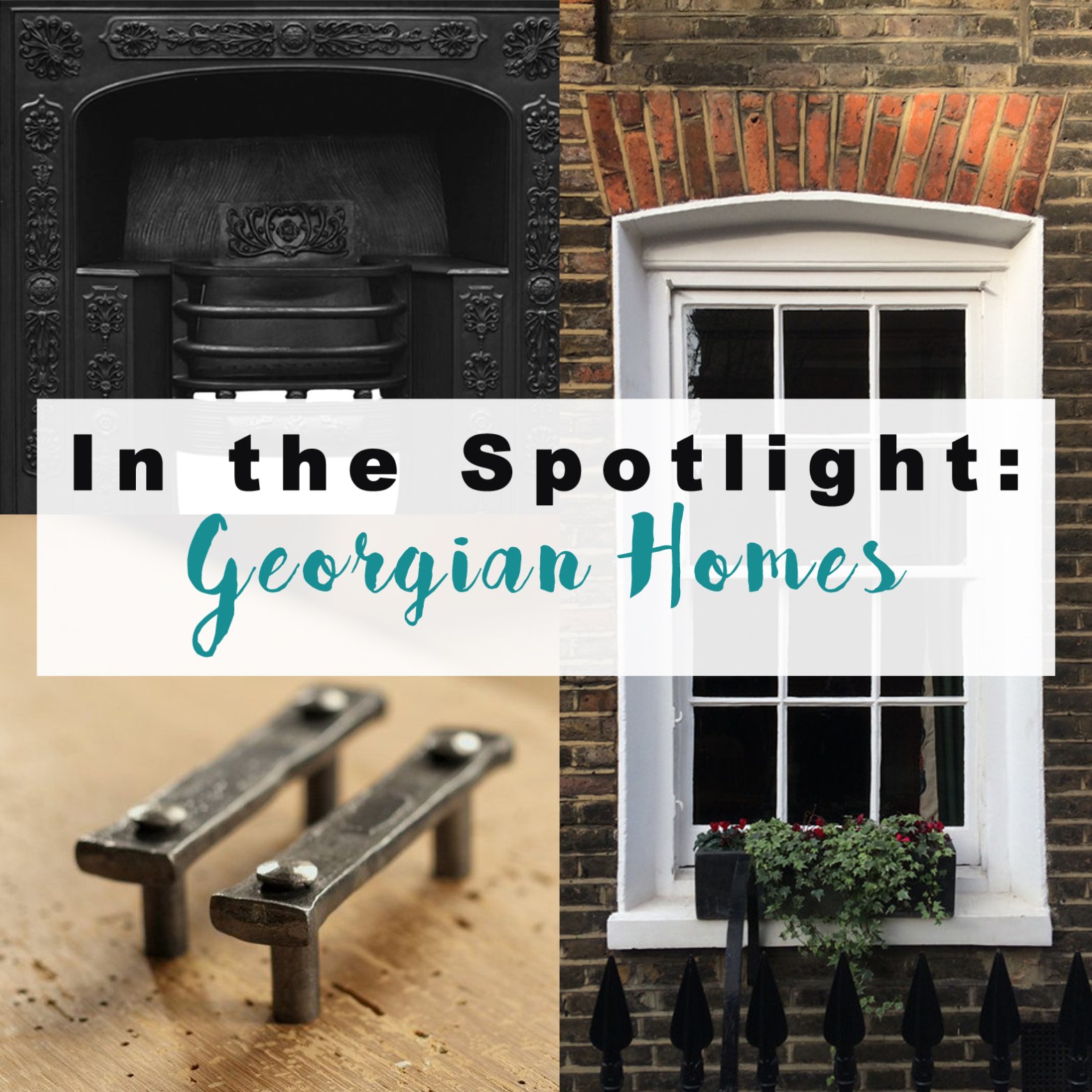
A fireplace is usually sandwiched between two alcoves in the main four rooms of a typical period home (unless they have been removed). Fireplaces serve as a key aesthetic feature in rooms and this is particularly true of Georgian ones. Although fireplaces are symmetrical with strong horizontal and vertical lines, a Georgian surround can include small ornate moments as in the picture below. Iron features heavily in this era, so it is fitting that fireplace inserts were made out of cast iron.
Some homes have had their fireplaces blocked up due to electrical and central heating being introduced over time – they simply became redundant as a means to get warm, particularly when they are associated with Carbon Monoxide poisoning! Some homeowners went one step further and removed entire chimney breasts in order to get more floor space in a room. Whilst blocking up fireplaces and removing chimney breasts is understandable, doing so does remove much of the charm and character of period buildings.
If you are looking to open up or rejuvenate your Georgian home’s fireplace, purchasing an antique cast iron inset can set you back a few thousand pounds and an antique surround a few thousand more! If you are on a lower budget, there are surround and insert replicas that can be picked up for a few hundred pounds. If you are crafty, however, you could probably DIY a Georgian style surround for a very low cost. Whichever option you go for, staying true to the typical proportions and monotone colour scheme of Georgian fireplaces will ensure you have a great focal point that restores balance and character to your interior scheme.
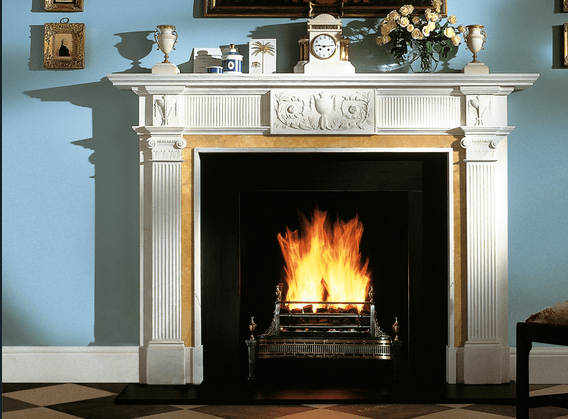
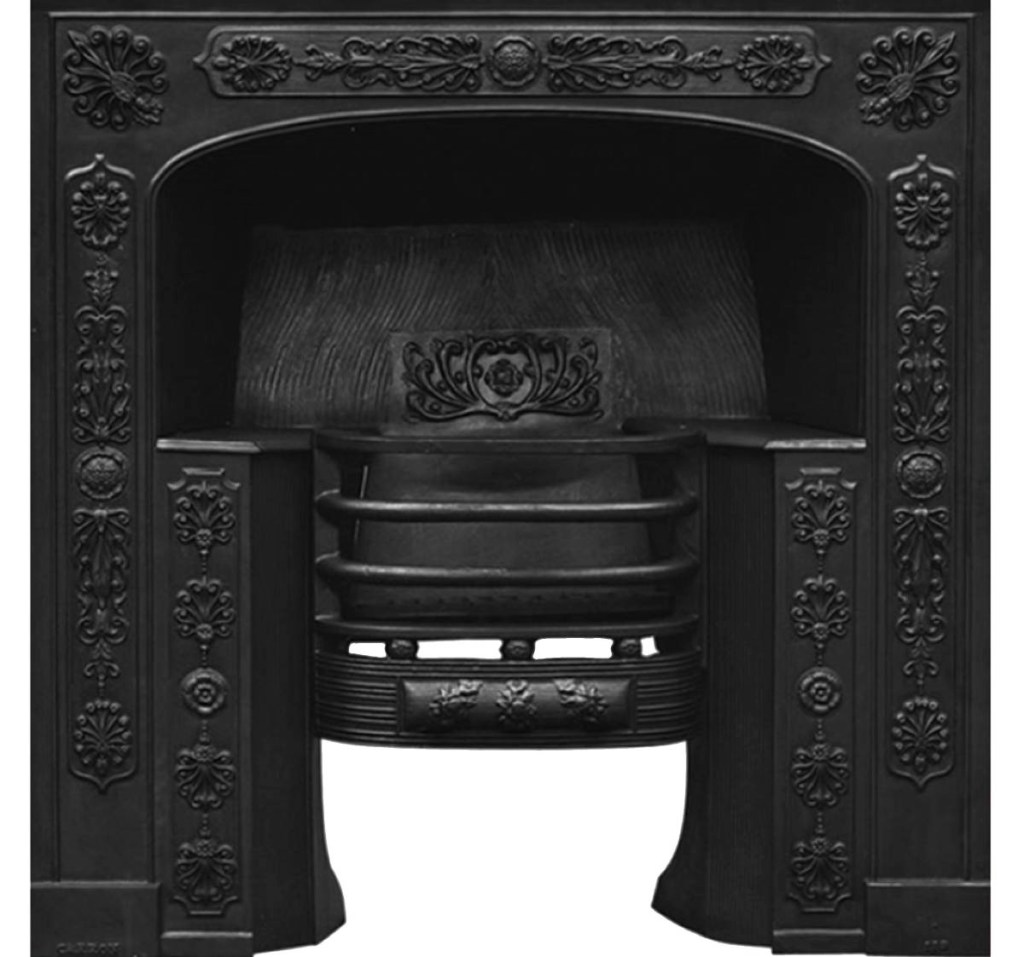
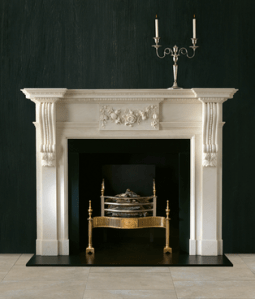
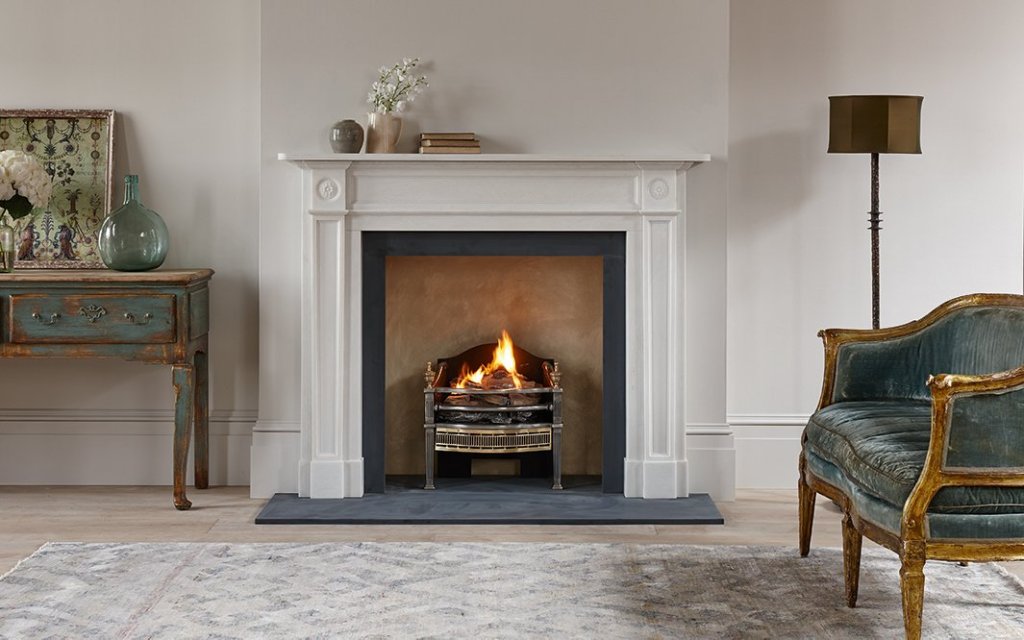
https://www.etonsofbath.com https://www.britainsheritage.co.uk
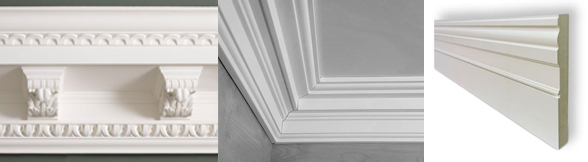
Coving and skirting during this period are similar to the fireplaces in that they are linear, but can be quite decorative. If you are not restoring coving or skirting that is already in place, then replacements can be purchased quite easily online or in hardware stores. More intricate coving is better suited to larger rooms and country homes, but for a typical residential home, a simpler design would work better so that there isn’t too much visual stimulation.
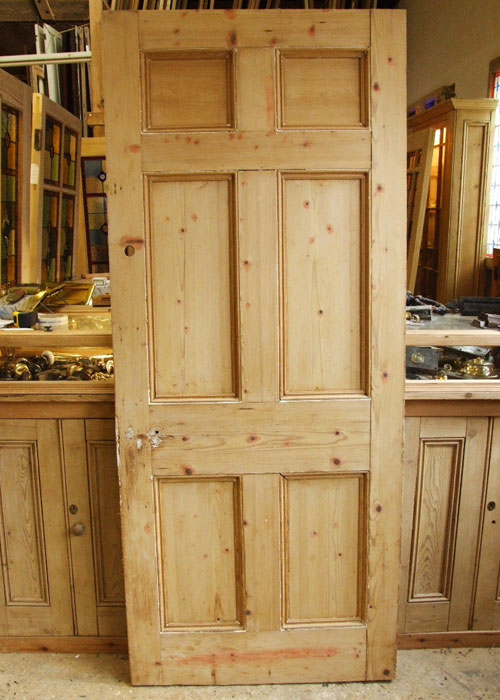
Another important feature that is key to Georgian interiors is the internal doors which were typically six panelled. Modern or fire-proof six panel doors are readily available in hardware shops, however, as with other period features, you can find reclaimed doors online for a reasonable price. Reclaimed doors are heavier, as they are made out of real (rather than engineered) wood and have a greater depth between the rails and panels. As such, they have a grander and older feel to them and so are definitely worth the investment – so long as there is no specific need for fire doors. Whatever the type of door you choose, it is a good idea to keep the internal doors consistent throughout your home so that transitioning through the spaces makes sense.
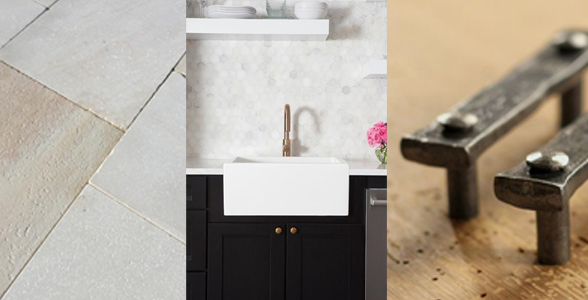
Materials to incorporate into your Georgian interior scheme should include iron, as well as wood, stone and marble. If you are looking to incorporate pattern, go for something that is symmetrical and muted or neutral in colour as the overall feel of your home needs to feel calm and relaxing to be true to the Georgian style. Try light stone flooring, a marble backsplash or iron hardware to finish off your home.
 Rosanna Alfonso Developments